


Blog
Almond Flour Blueberry Muffins (Gluten-Free)

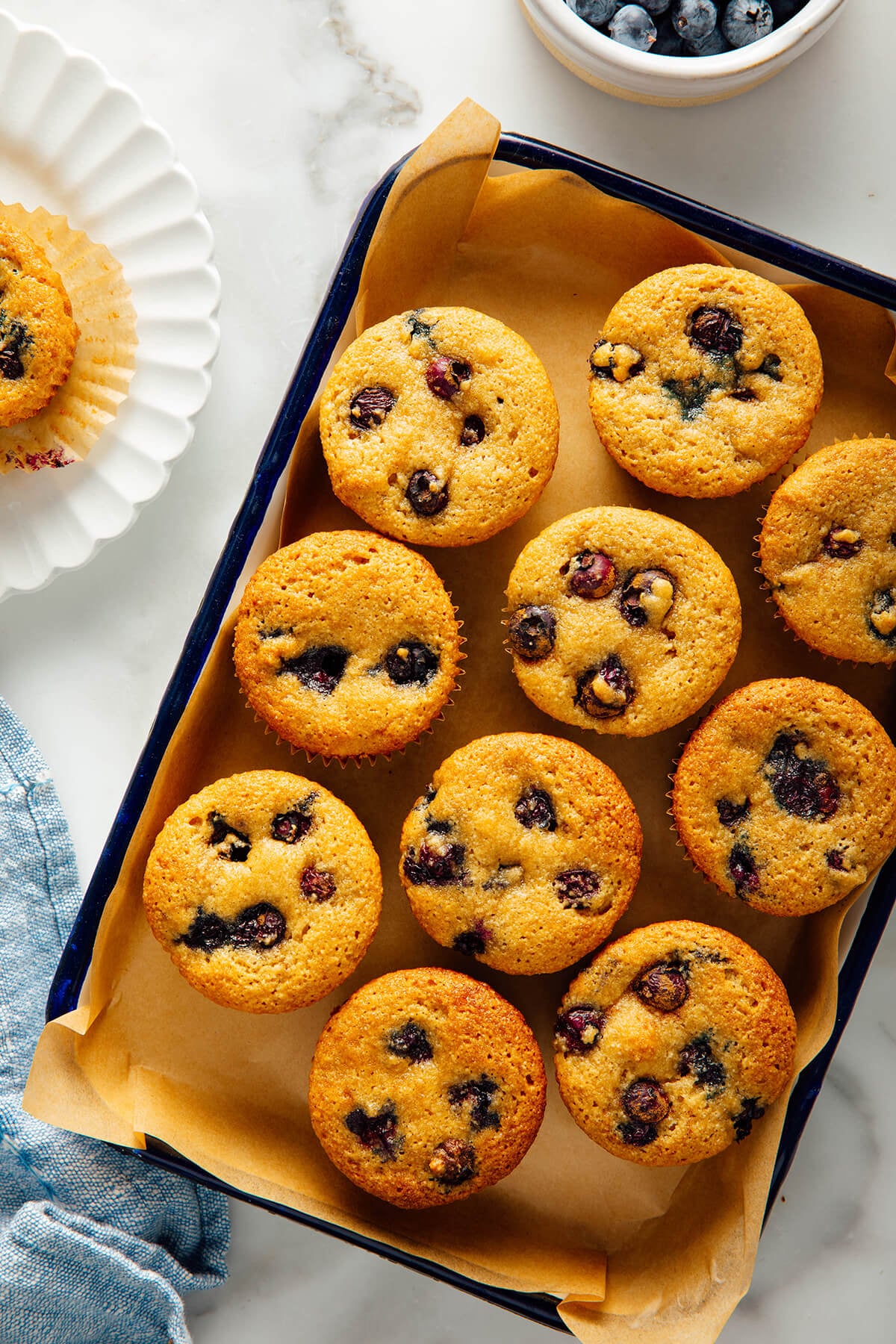
You won’t believe that these blueberry muffins are gluten-free, but they are! The recipe has much in common with my Healthy Blueberry Muffins, but it uses almond flour instead of regular flour. No xanthan gum, no starches, just simple ingredients built around one gluten-free flour.
Transitioning a recipe from conventional wheat-based flour to almond flour is never straightforward. It requires reducing the amount of liquid, since almond flour is less absorbent, and fat, since almond flour naturally contains some. It took over ten tries to get the texture of this muffin just right, but it was worth the effort.
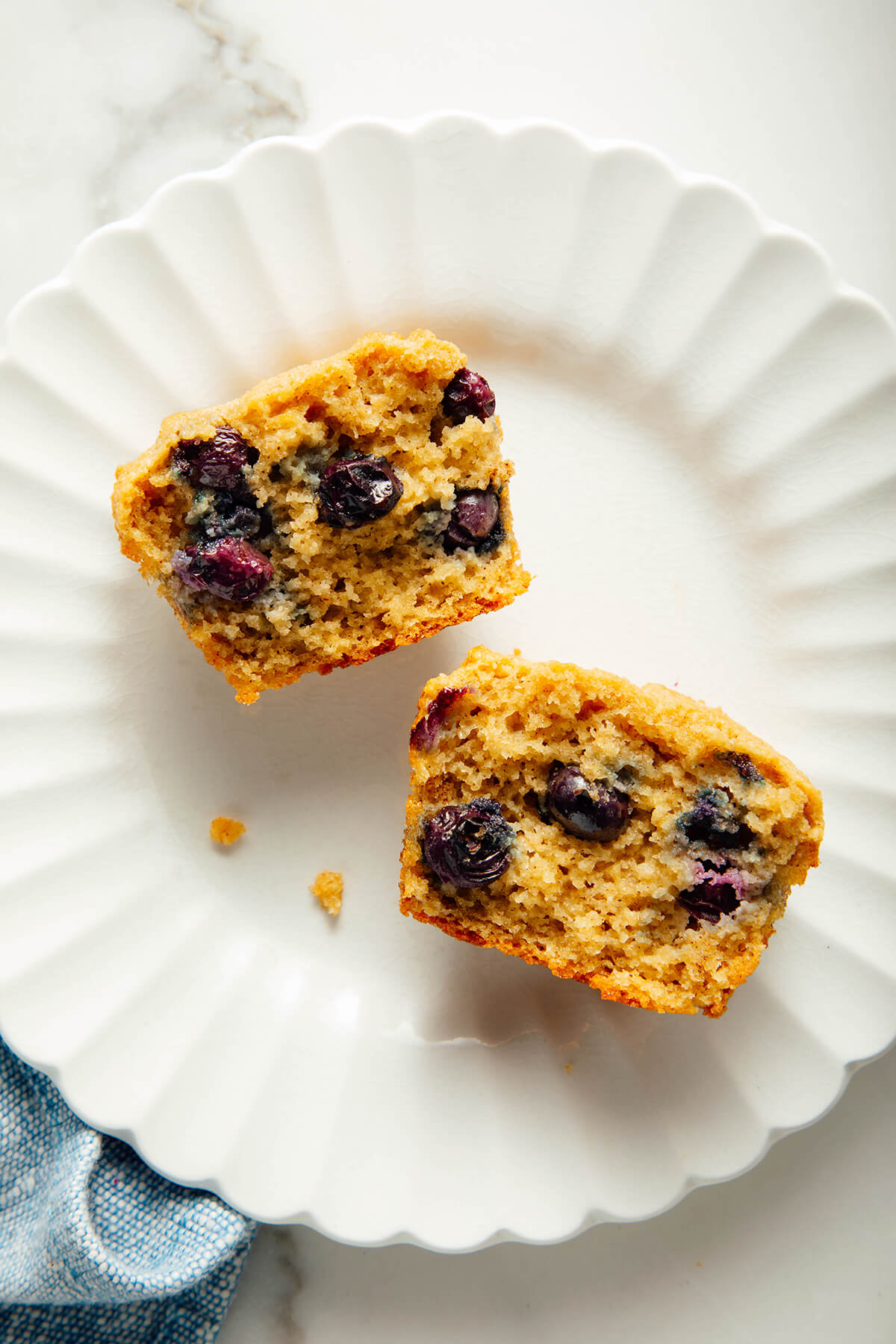
Like any great blueberry muffin, they’re golden on the outside, fluffy on the inside, and punctuated by jammy blueberries. Unlike most blueberry muffins, this recipe is quite wholesome but still tastes like a treat.
3 Reasons to Love Almond Flour
The truth is that I don’t need my muffins to be gluten-free, but I’ve become such a big fan of almond flour for the following reasons:
1) It’s healthy.
It’s just finely ground almonds, after all. As a carb-conscious baker, I don’t like gluten-free all-purpose blends because they’re made with added starches that don’t offer any nutritional benefits. I’ve also found that when I use almond flour, I can get by with less sweetener, since it doesn’t dull the other flavors like all-purpose or whole wheat flours do.
2) It’s delicious.
Almond flour yields wonderfully golden, tender and moist baked goods. Instead of tasting overtly of almond, I usually notice that the other ingredients shine through more brightly. The trick is getting the right proportions of wet and dry ingredients. It took over ten tries to make sure these muffins were just right‚ but we did it!
3) It’s easy to use.
So easy, in fact, that I prefer making almond flour-based baked goods with my four-year-old daughter. You don’t have to worry about overstirring the mixture, since there’s no gluten to make the muffins tough.
Ingredient Notes & Options
These muffins are made from simple, wholesome ingredients. Here’s what to know before you get started.
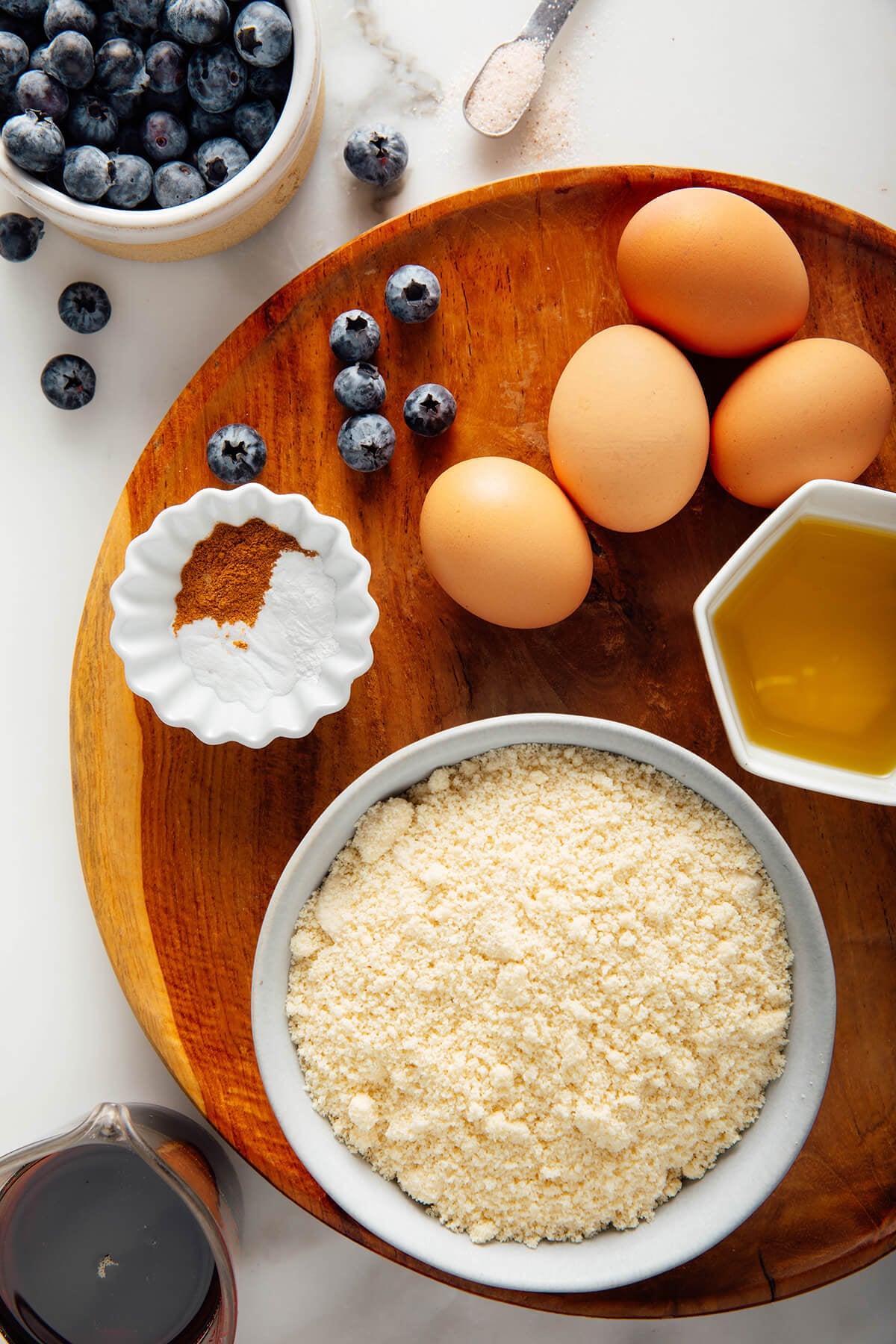
Fine blanched almond flour: I always recommend Bob’s Red Mill or Whole Foods 365, since those are the brands that I use when testing my recipes. Other brands of almond flour can yield inconsistent results. Measure the almond flour in cups like you would all-purpose flour—spooned and leveled, not scooped—or use a scale.
Maple syrup or honey: I slightly prefer maple syrup (always the real kind!) in these muffins since its flavor is more subtle. Honey tastes more apparent and offers some extra sweetness.
Olive oil or butter: If you use a mild extra-virgin olive oil like California Olive Ranch, you won’t taste it. Use butter if you’re nervous about it, but I can’t taste much of a difference in the end result.
Lemon juice: Offers some bright flavor that complements the blueberries. More importantly, the acidity counteracts the baking soda’s alkalinity. Without the lemon juice, the baked blueberries look unappetizingly green around the edges.
Eggs: This recipe calls for four eggs, which is more than most muffin recipes require. The eggs provide structure to this gluten-free recipe, and you can’t make it without them. I promise, the muffins don’t taste eggy.
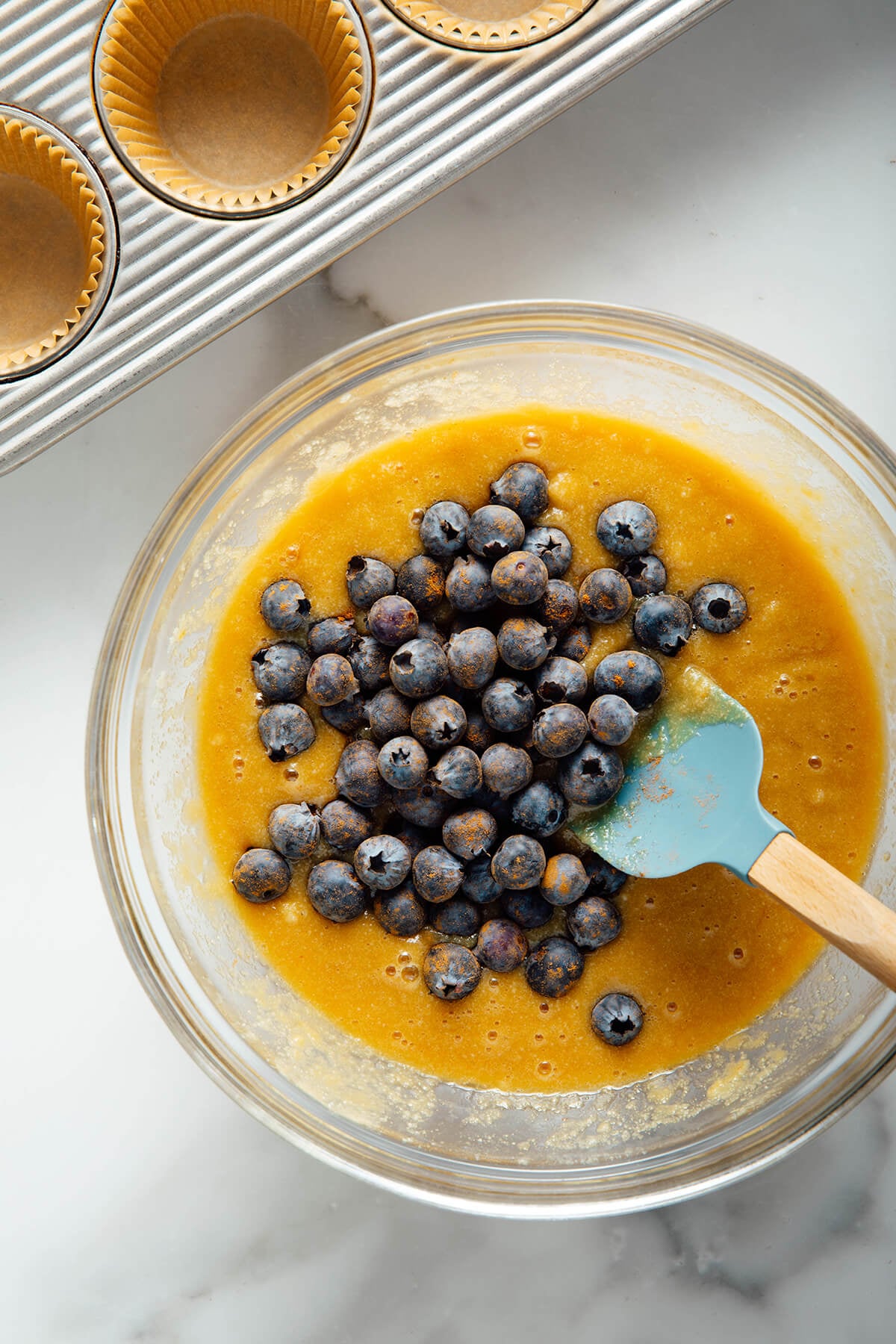
Blueberries tossed in cinnamon: I nearly gave up on this recipe because the blueberries kept sinking to the bottom, leaving the top plain and the bottoms soggy with berries. Tossing the berries in flour didn’t help, but then I tried tossing them in ground cinnamon, and it works beautifully! It tastes good, too.
Blueberry Tip
You can make these muffins with fresh or frozen blueberries. Fresh yields the best results, but frozen berries (do not defrost them first) make nice muffins, too.
More Almond Flour-Based Goodness
Here’s a short list of my go-to recipes made with almond flour:
Please let me know how your muffins turn out in the comments. I love hearing from you.
Print
Almond Flour Blueberry Muffins (Gluten-Free)
These gluten-free blueberry muffins are made with one simple flour, almond flour! They’re golden, fluffy and so delicious. Recipe yields 1 dozen muffins.
- Preheat the oven to 325 degrees Fahrenheit. Line a muffin tin with paper liners.
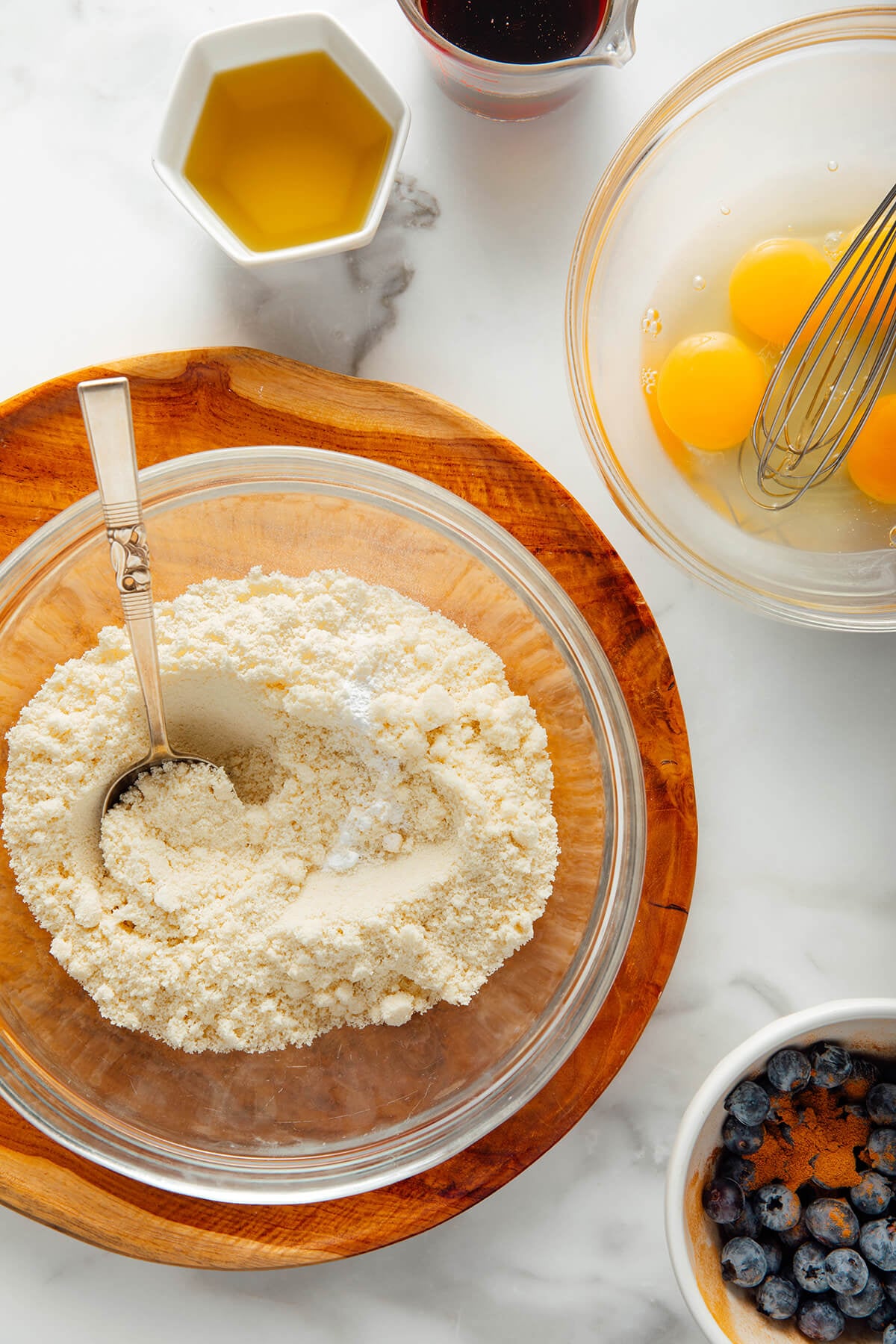
- In a large bowl, combine the almond flour, baking powder, baking soda, and salt. Whisk to blend.
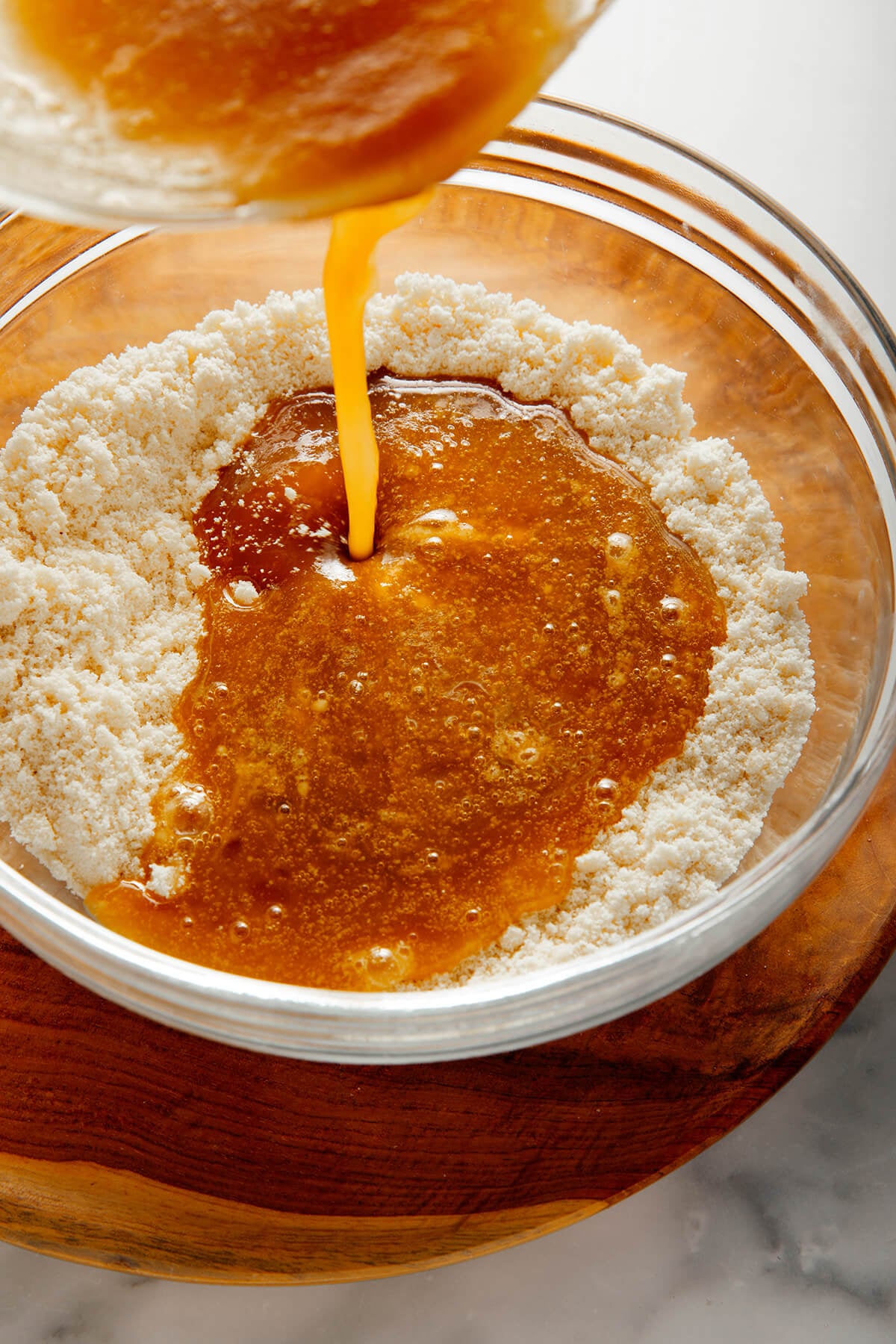
- In a 2-cup liquid measuring cup or medium mixing bowl, combine the maple syrup, olive oil and lemon juice, and whisk until they’re well blended. Crack the eggs into the bowl and beat with a whisk until the mixture is uniformly colored. Pour the wet ingredients into the dry mixture and stir until only a few clumps remain.
- In a smaller bowl, stir together the blueberries with the ground cinnamon (this helps prevent the blueberries from sinking to the bottom of the cake). Leave any excess cinnamon in the bowl (or include it all for a more graham cracker-like flavor), and gently fold the blueberries into the batter, being careful not to over-stir so the cinnamon stays attached.
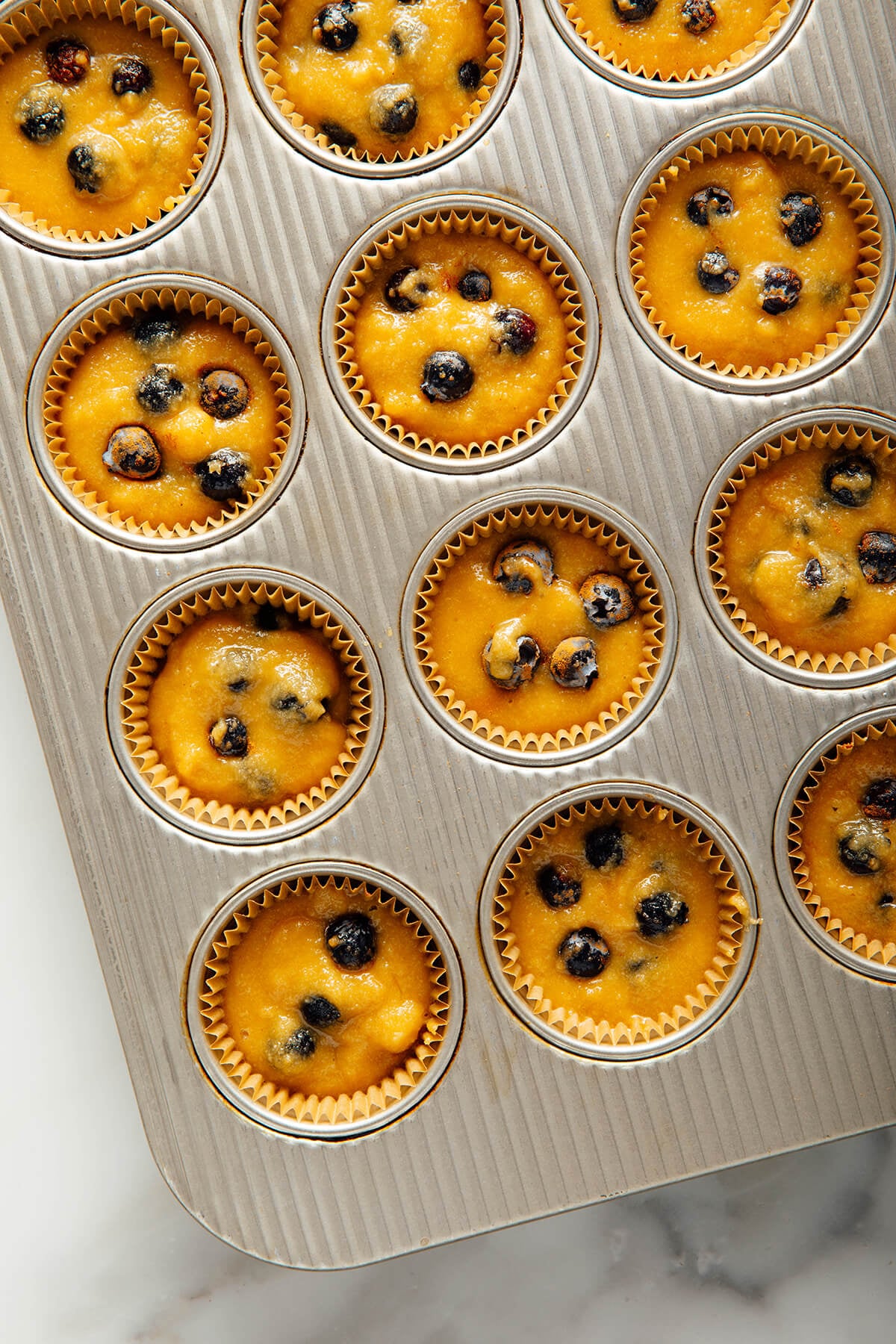
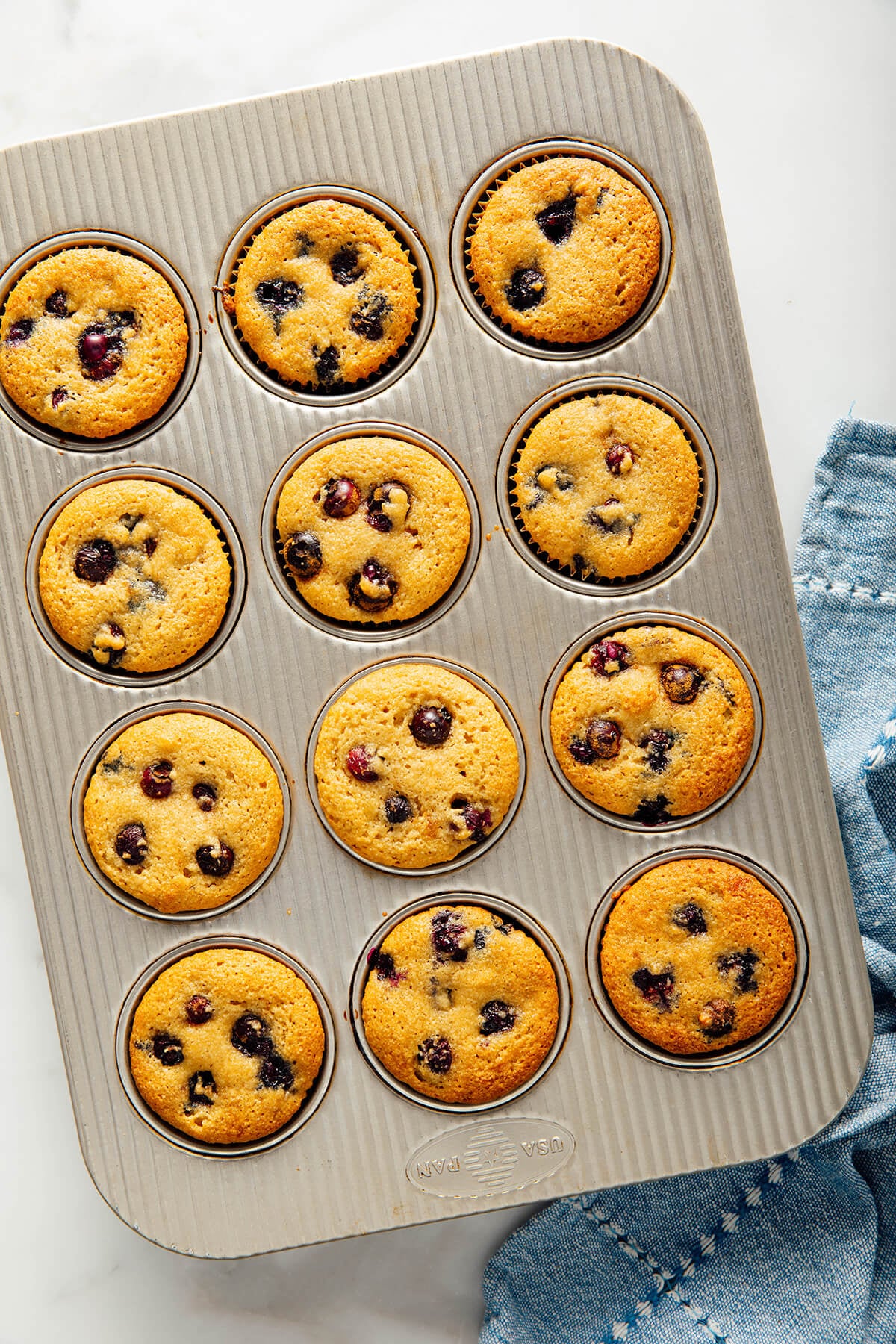
- Divide the batter evenly between the muffin cups. They’ll be quite full, but that’s ok. Bake until the muffins are golden brown, the center is firm to the touch, and a toothpick inserted into the center comes out clean, about 24 to 27 minutes. Leftover muffins will keep at room temperature for 1 to 2 days, in the refrigerator for up to 5 days, or in the freezer for up to 3 months.
Notes
Recipe adapted from the Lemony Almond-Blueberry Cake in my cookbook, Love Real Food (page 197).
*Almond flour notes: Not all almond flours are created equally. I recommend Bob’s Red Mill’s super-fine almond flour and Whole Foods 365’s almond flour.
**Frozen berries: Do not defrost them first—use them straight from the freezer.
Nutrition
The information shown is an estimate provided by an online nutrition calculator. It should not be considered a substitute for a professional nutritionist’s advice. See our full nutrition disclosure here.